How to Hire Outdoor Gear in Australia | Four Swags
27 October 2026 · Four Swags
A step-by-step beginner guide: work out what the trip actually needs, find local gear on the marketplace, check condition and fit, book and pick up, look after it, return it. Opens on the garage-clutter pain and closes on adventure-more-own-less.
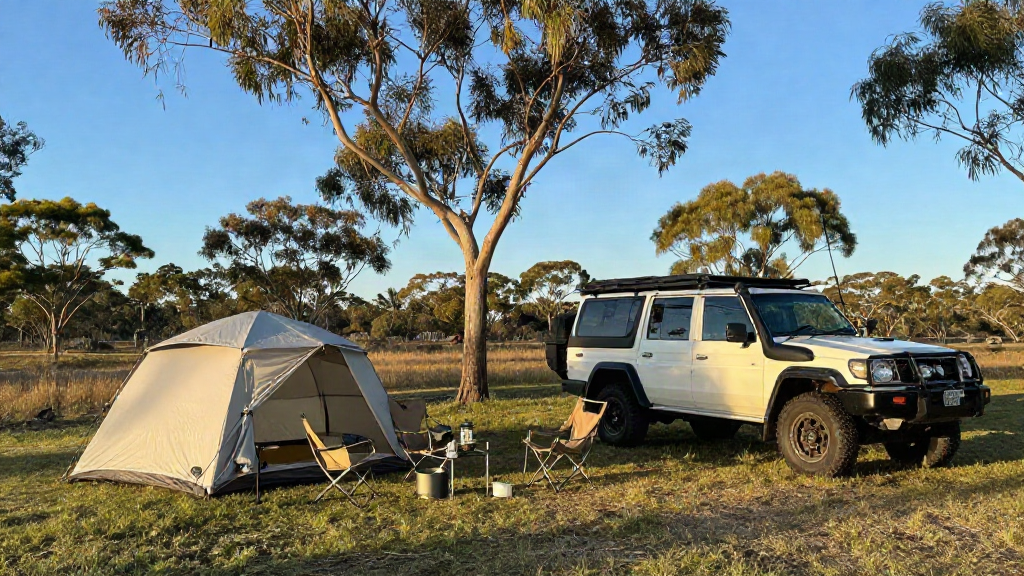
Every Australian garage tells the same story. A swag that has been used twice. An esky that only comes out for Christmas. Two roof racks waiting for a trip that keeps getting pushed back. A set of recovery gear you hope you never need but cannot bring yourself to sell.
Here is the good news: you do not have to choose between exploring and owning a shed full of kit. You can hire the gear you need, when you need it, and give the garage back to the car.
This guide walks you through hiring outdoor gear in Australia, step by step.
Why your garage fills up so fast
Most outdoor gear is used a handful of times a year. A snow tent sits idle for 50 weekends, then earns its keep for three. A roof-top tent lives for a two-week road trip and then gathers dust. You paid full price, you store it, you maintain it, and it still ages in the corner.
Buying makes sense when you use something constantly. For everything else, hiring does the heavy lifting without the storage, the servicing, or the sunk cost.
Step 1: Work out what this trip actually needs
Before you open a single listing, write down the trip itself. Where are you going, how long for, who is coming, and what weather are you likely to meet?
A weekend on the coast needs very little: a swag or tent, camp chairs, a cooking setup and lighting. A week in the high country in winter is a different brief altogether, with snow gear, insulation and proper sleeping mats.
Match the gear list to the trip, not to the fantasy of every trip you might take one day. That one habit is what stops the garage from filling up again.
Step 2: Search local gear instead of buying new
This is where the Four Swags marketplace earns its place. It is a peer-to-peer marketplace for hiring outdoor gear from locals, covering camping, caravanning, 4WD, surfing, biking and snow kit.
Search by what you are actually doing. Heading off-road? Look for recovery gear, a compressor or a set of all-terrain tyres on rims. Taking the family down the coast? Search camp kitchens, stretchers and a decent-sized esky.
Because you are hiring from people nearby, you often find better-quality kit than the cheap entry-level version you would buy new for the same money. You get the good stuff for the weekend, and you hand it back when you are done.
Step 3: Check the gear before you commit
Read the listing photos closely and check the details. What is included? Is it the full kit or just the main item? What condition is it in?
Ask the owner questions. Does the tent have all its pegs and poles? Is the fridge working properly? When was the gear last used?
Good listings are honest and specific, and a quick message usually tells you a lot about how the gear has been looked after.
Step 4: Book, pick up and go
Once you have found the right gear, confirm your dates and arrange a pickup that suits you both. Many hirers meet locally, which keeps things simple and lets you eyeball the gear before you take it.
Do a quick check together on pickup: agree on what is there, note any existing wear, and ask how the owner likes it packed away. That short conversation prevents most of the awkwardness later.
Then load up and hit the road. No lay-by, no delivery wait, no box to unpack and store.
Step 5: Look after it, then hand it back
Treat hired gear as if you are borrowing it from a mate, because in a sense you are. Keep it dry, keep it clean, and use it the way it was meant to be used.
When you get home, give everything a wipe down, let it air out fully, and return it on the agreed day. Return gear in good order and you build a reputation as a reliable hirer, which matters when you want to borrow the good stuff again next season.
What hiring actually costs you
Add up what owning really involves: the purchase price, the storage space, the servicing, the rego and insurance on trailers and racks, and the slow loss of value while it sits in the garage.
Hiring flips that. You pay for the days you use, and nothing for the 350 days you do not. For occasional gear, that is almost always the smarter deal.
Got idle gear of your own?
It works the other way too. If you already own a swag, a roof rack, a rooftop tent or a set of recovery gear that mostly sits unused, you can list it on Four Swags and earn from it.
Listing takes about five minutes: add a few photos, describe what is included, and set your daily rate. You keep the gear, you set the rules, and you decide when it goes out.
Adventure more, own less
You do not need a garage full of gear to explore this country. You need the right kit for the trip in front of you, and a simple way to get it without buying and storing it forever.
So start with the next trip. Work out what it really needs, hire the good gear from someone local, look after it, and hand it back. Your weekends get bigger, your garage stays clear, and the adventure does not wait for you to save up.
Hire it from a local
More guides
- Weekend Camping Checklist: Gear to Hire, Not Buy
- What to pack for your first camping trip: the complete checklist
- Camping near Melbourne: 10 great spots within 4 hours
- Should you hire or buy camping gear? The real cost
- Camper trailer hire: a first-timer's guide
- Snow trip from Melbourne: checklist and what to hire