Best Camping Gear for Family Trips: What to Hire or Buy
24 November 2026 · Four Swags
Find the best camping gear for family trips, from tents and sleeping bags to cooking kits, and learn what to hire rather than buy in Australia.
Last Updated: November 10, 2026
Quick Summary
The best camping gear for family trips is a tent sized for one or two more people than you have, cooking equipment such as a two-burner gas stove, and sleep gear rated for the coldest expected night. Buy the core shelter and bedding you will use often, and hire occasional items like a camp kitchen or gazebo.
- Choose a tent rated for one or two more people than your family, so bags and clothing fit.
- A 35 to 45 litre cooler suits four people on a three-night trip if you pre-freeze water bottles.
- Rate children's sleeping bags a few degrees warmer and use a mat wider than the bag.
- Buy stage one safety and shelter gear new, and hire comfort items while you learn your needs.
- Hire occasional items like a camp kitchen or large gazebo, especially on early trips.
Table of Contents
- Family Camping Gear Checklist: The Essentials Before You Leave
- Choosing the Best Family Camping Tent for Your Crew
- Family Camping Cooking Equipment, Sleep Gear and Budget Trade-offs
- Why Camping Gear Hire Makes Sense for Your Next Family Trip
- Frequently Asked Questions
Planning a family camping trip usually means spending heavily on the best camping gear for family trips, which you'll use only a few weekends a year, or borrowing from friends. Four Swags, an Australian marketplace, lets local owners hire out tents, swags and camp kitchens, so you can get the right setup without storage problems. This guide covers what to bring, tent choice, cooking and sleep gear, and when hiring beats buying.
Family Camping Gear Checklist: The Essentials Before You Leave
Most family trips fall apart over small omissions, like a forgotten torch or too few warm layers. Check shelter, bedding, cooking, lighting, clothing and first aid the night before.
The best camping gear for family trips is the gear that gets used. Start with the basics and add comfort items once you know what your family needs.
Choosing the Best Family Camping Tent for Your Crew
A tent is hard to improvise, so choose it first. Consider how many people sleep in it, how old the children are, and how much space and set-up time you have.
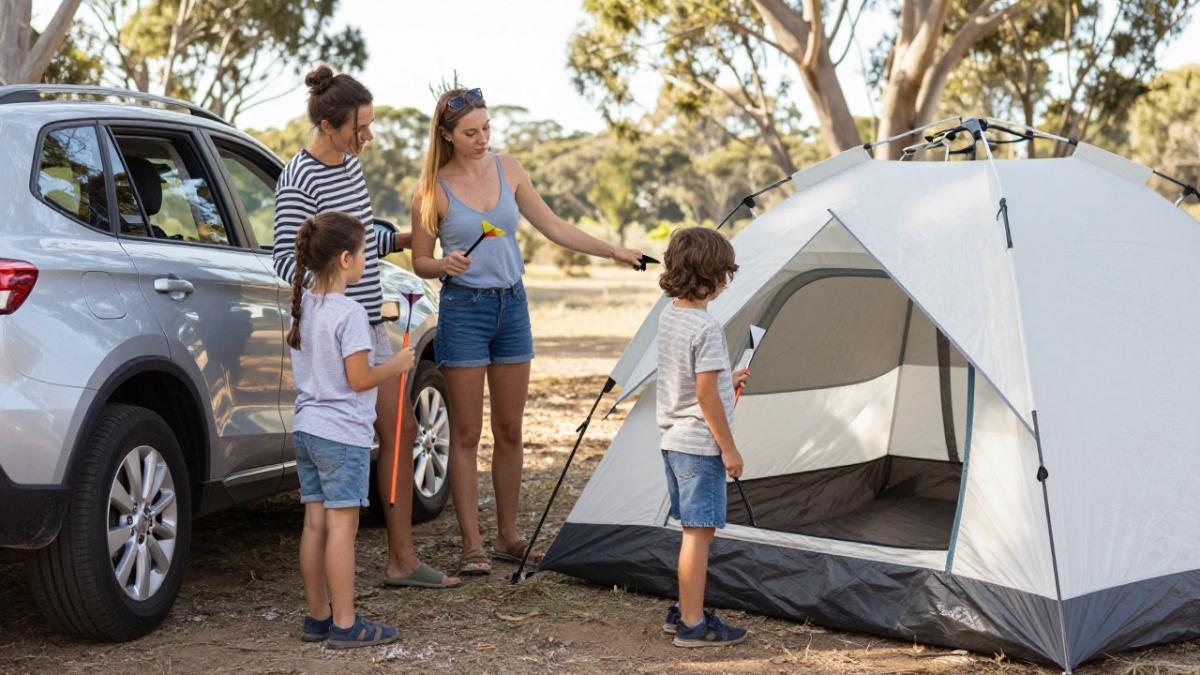
Size by headcount and gear. Choose a tent rated for one or two more people than you have, so sleeping bags and clothing fit. A family of four with young children usually suits a four- to six-person tent. Teenagers who want their own space may need a divider or two sleeping compartments.
Consider child age. Toddlers often sleep better in a tent with a separate small room, so they cannot roll into a parent's area. Older children can usually share a standard dome tent. Choose a door and zips that children can work without help.
Set-up time. A simple dome tent with colour-coded poles pitches faster than a large cabin tent. Practise pitching at home with the children helping, so you know how long it takes.
Transport and storage. Check packed size and weight against the boot space left after bags, mats, a cooler and clothing. Small-car families often do better with a tent that packs smaller, even with slightly less floor space.
Watch out: a tent that feels roomy in a shop can feel cramped once mats and bags are inside, so measure floor area against the number of mats you plan to use.
Family Camping Cooking Equipment, Sleep Gear and Budget Trade-offs
Cooking. A two-burner gas stove with a windscreen, one large pot, one frying pan and basic utensils covers most family meals. A 35 to 45 litre cooler suits four people on a three-night trip if you pre-freeze water bottles. Use a secure food box, since wildlife and wind are common problems.
Sleep gear by age. Adults need a sleeping bag rated to the coldest night expected, plus a mat. Children lose heat faster, so rate their bags a few degrees warmer and use a mat wider than the bag. If you want to check whether sleeping bag and mat hire from local owners costs less than buying, the listings show what is available. Pack spare dry clothes for each child in a separate bag, since a wet sleeping bag ruins many first nights.
Budget tiers. Stage one covers safety and shelter: a family tent, sleeping bags, mats, a first aid kit and a torch per person. Stage two adds comfort: a camp table, chairs, a lantern and basic cooking. Stage three covers extras like a gazebo. Buy stage one new and hire the rest while you learn what your family uses.
Buy, borrow or hire. Buy items you will use four or five times a year, such as family-sized sleeping bags and a reliable tent. Hire occasional items like a camp kitchen or large gazebo, especially on early trips.
Watch out: a comfort-rated sleeping bag is not the same as a limit-rated one, so check the label before relying on it for a child on a cold night.
The article's key gear choices for cooking, sleeping and budget are summarised below.
| Gear | Key spec | Note |
|---|---|---|
| Cooler | 35 to 45 litres | Suits four people on a three-night trip |
| Cooking | Two-burner gas stove | Add a windscreen; one large pot and frying pan |
| Adult sleeping bag | Rated to coldest expected night | Pair with a mat |
| Child sleeping bag | Rated a few degrees warmer | Use a mat wider than the bag |
| Stage one (safety and shelter) | Tent, bags, mats, first aid, torch | Buy new |
| Stage two (comfort) | Camp table, chairs, lantern, basic cooking | Hire while learning needs |
| Stage three (extras) | Gazebo and similar | Hire |
Why Camping Gear Hire Makes Sense for Your Next Family Trip
Most camping gear sits in a garage for most of its life. Hiring means you can pick up items from a local owner near your route. For Melbourne families, camping gear hire in Melbourne shows the local options within a few hours of the city. Four Swags lets you hire individual pieces or a complete camp setup, with ID checks, a bond on each hire and clear fees shown upfront.
If you already own gear and want to earn from it while it sits idle, you can list it on Four Swags too. Read how to monetise idle camping equipment before you list. Browse camping gear hire in Essendon to see what local owners offer near the Calder route. Either way, hiring gives your family the right setup for each trip without the burden of ownership. Australian Camping and Caravanning Guide Parks Victoria camping information Kids Health guidance on sleeping warm outdoors
Ready to plan your trip? Find the gear your family needs with Four Swags and pick it up near your route.
Frequently Asked Questions
What camping gear does a family need?
A family trip needs shelter, sleep gear, cooking equipment, lighting, seating and clothing suited to the weather. Start with a tent sized for everyone plus one extra person for gear, then add sleeping bags rated for the lowest expected night temperature. Cooking needs a stove, a cooler or camp fridge, and basic utensils. Lighting, a first aid kit and layered clothing complete the core list. Hiring these items as a kit from a local owner is often more practical than buying everything for a few trips a year.
What is the best tent for a family camping trip?
The best family camping tent depends on family size, child ages and how you travel. For most families, a dome or tunnel tent with a separate sleeping area, a rainfly that covers the whole shelter and at least one spare square metre per person gives enough room. Check that setup is manageable for one adult alone, and look at packed size against your vehicle space. Trying a tent before committing, through hire, is a sensible way to test fit before buying.
Is it cheaper to hire camping gear or buy it for family trips?
It depends on how often you camp. Buying a tent or swag and using it only a few weekends a year often costs more per night than hiring it. Renting gear also avoids storage problems and the cost of replacing items that wear out between trips. Compare the total hire cost for your planned trips against the purchase price and upkeep of the items, and remember that buying only makes sense if you camp regularly enough to use the gear often.
Hire it from a local
More guides
- How to Coordinate Multi-Stop Camping Gear?
- Tips for First-Time 4WD Camping: Where Do You Start?
- Renting a Camper Trailer for Beginners: A Simple Start
- How to Rent Camping Gear Safely: A Step-by-Step Guide
- How to Save Money on Camping Gear Without Buying Cheap Junk
- How to Rent Out Camping Equipment in Australia