How to Save Money on Camping Gear Without Buying Cheap Junk
24 November 2026 · Four Swags
Learn how to save money on camping gear by hiring, buying second-hand and caring for your kit. Compare costs and build a smarter setup for your next trip.
Last Updated: November 12, 2026
Quick Summary
To learn how to save money on camping gear, plan your kit around how often you actually camp, then hire or buy second-hand instead of buying cheap junk. Hire gear for occasional trips, inspect used items carefully, splurge only on shelter and sleep systems, and maintain what you own so it lasts for years.
- Buy in priority order: shelter, sleep system, cooking basics, lighting, then comfort items.
- Hiring turns the full purchase price of rarely used gear into a small cost per trip.
- Pitch a used tent and check every seam for mould before you pay.
- Save on chairs, cookware and lighting; splurge on tents and sleeping bags.
- Dry canvas fully in the sun before storing it, or mould sets in for good.
Table of Contents
- Work Out What You Actually Need Before You Spend
- Camping Gear Hire Beats Buying for Occasional Trips
- Buying Second-Hand Camping Gear: What to Inspect
- Where to Save and Where to Splurge on Gear
- How to Maintain Camping Gear So It Lasts for Years
- List Your Idle Gear and Turn It Into Income
- Frequently Asked Questions
Work Out What You Actually Need Before You Spend
Most camping gear gets bought in a panic the week before a trip, and that's exactly how money disappears, which is why knowing how to save money on camping gear starts with planning ahead. Gear bought in a rush is often used only a handful of times and then stored away.
Ask yourself three questions:
- How many nights will you sleep outdoors this year?
- Are you car camping, towing, or hiking in?
- Who's coming with you, and what do they need to stay warm and dry?
A family doing two weekend trips a year needs a very different kit from someone planning a month on the road. Write your answers down. They set your budget.
Match Gear to Your Trip Type and Frequency
Trip type decides almost everything. Car camping gives you room for a big tent, a fridge and proper chairs. Backpacking strips that back to a light tent, a sleeping bag and a mat you carry yourself.
Frequency decides the rest. A handful of trips a year rarely justifies buying everything new. For families weighing up hire versus purchase across a few trips, our guide to the best camping gear for family trips breaks down what's worth owning and what's worth hiring.
A Prioritised Starter Kit That Won't Break the Budget
Buy in this order. It keeps you safe and comfortable without blowing the budget on extras.
- Shelter first. A tent or swag that suits your climate and group size.
- Sleep system next. Sleeping bags rated for the cold you'll actually face, plus mats or stretchers.
- Cooking basics. A stove, fuel, a pot, a pan and a lighter.
- Lighting and power. A head torch and a lantern, plus a power bank for longer trips.
- Chairs and table. Comfort items, not survival items. Hire or borrow these early on.
- Fridge or cooler. Only once you're camping often enough to justify it. A 12V fridge is a significant purchase, so consider hiring one first.
The total cost of a starter kit varies widely with the gear you choose, so work out your own figure from current prices before comparing it with hiring.
Skip the gadgets until the basics are sorted. A cheap tent that leaks ruins a trip faster than a missing espresso maker.
Camping Gear Hire Beats Buying for Occasional Trips
Hiring wins whenever your nights per year are low. The maths is simple: gear you use a few times a year costs you the full purchase price and then sits idle. Hiring turns that into a small, one-off cost per trip.
Four Swags is a marketplace where you can hire tents, swags, camp kitchens, kayaks and camper trailers from local owners, and pick gear up along your route. Renters are verified, a bond is held on each hire, and fees are shown upfront. For current prices and discounts on longer hires and bundles, check the Four Swags website.
If you're local to the bayside area, you can hire camping gear in Cheltenham and head straight for the coast.
The Cost-Per-Use Maths Behind Hiring
Cost per use is the only number that matters. Divide what you spend by the nights you'll actually sleep on it.
A tent bought new and used twice a year carries a high cost per night. The same tent hired for those two trips costs a fraction of that, with no storage, no repairs and no resale hassle. Run the sum honestly for each item before you buy.
Buying Second-Hand Camping Gear: What to Inspect
Second-hand gear is where the real savings live, provided you inspect it properly. A used tent in good nick can cost far less than new and still give you years of service. The trick is knowing what to look at before money changes hands.
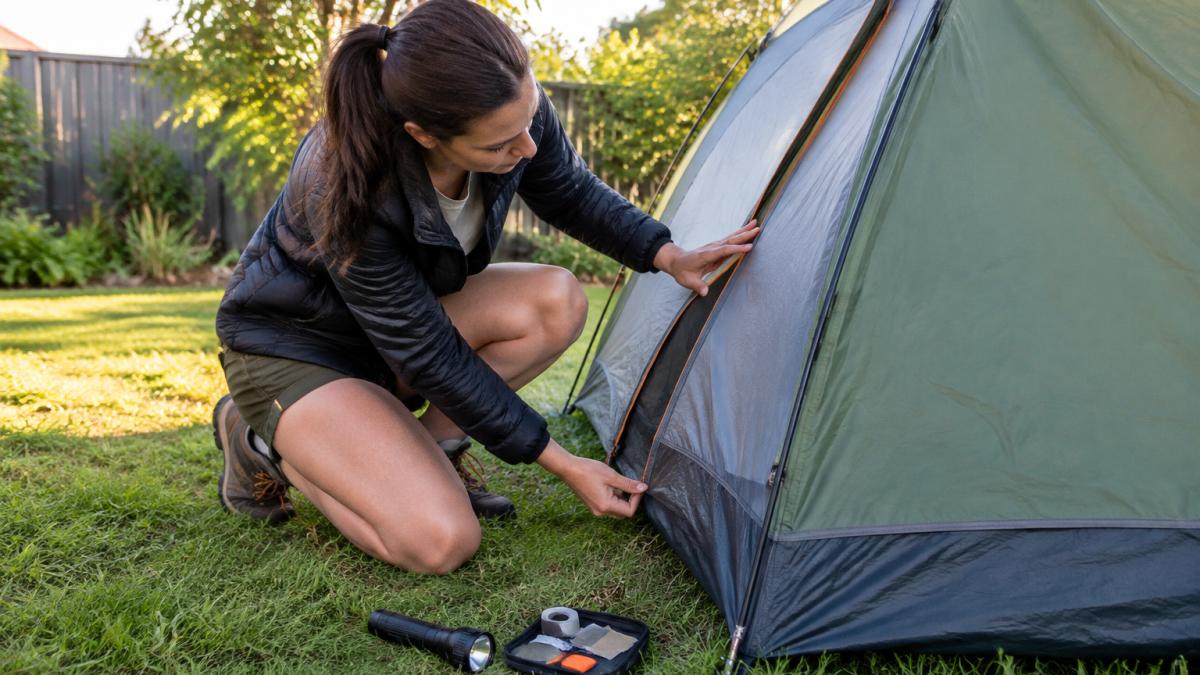
Pitch the tent before you pay. Never buy canvas sight unseen.
A Used-Gear Inspection Checklist
Work through this list every time:
- Pitch the tent and check every seam for mould, mildew or delamination
- Test every zip, and check the fly and floor for pinholes
- Confirm all pegs, poles and guy lines are present
- Smell the canvas. A musty smell means it was stored damp
- Check sleeping bag loft and look for compressed or clumped filling
- Inspect stove hoses and seals for cracks, and ask when they were last replaced
- Look over fridge seals and test that it cools
- Ask how the gear was stored between trips
Walk away from mould. Once it's in canvas, it never fully comes out.
Safety, Hygiene and Fit Checks Most Buyers Skip
Beyond the obvious damage, used gear carries risks that don't show up in a quick look.
Sleeping bags and mats. Hygiene matters more than most sellers admit. Ask whether the bag has been washed and how.
Stoves and fuel systems. Safety is the priority here. Ask the seller to light the stove in front of you.
Tents and swags. Fit matters as much as condition.
Fit and sizing. Sleeping bags and packs are sized.
Watch out: a seller who won't let you pitch, inflate, or test an item before purchase is telling you something, walk away.
Where to Save and Where to Splurge on Gear
Save on anything that doesn't affect warmth, safety or weather protection. Splurge on the items that keep you dry and warm when the weather turns.
| Gear Item | Save or Splurge | Why |
|---|---|---|
| Tent or swag | Splurge | Shelter failure ruins the trip |
| Sleeping bag | Splurge | Warmth is a safety issue |
| Sleeping mat | Mid-range | Comfort matters, insulation matters more |
| Camp chairs | Save or hire | Rarely affect safety |
| Cookware | Save | Simple pots and pans work fine |
| Camp fridge | Hire first | Expensive and rarely used by occasional campers |
| Lighting | Save | Basic head torches do the job |
| Power station | Hire first | Costly, and only worth it for long trips |
Cheap gear has its place. A cheap chair is fine. A cheap tent in a storm is not.
How to Maintain Camping Gear So It Lasts for Years
Maintenance is the cheapest money-saver there is. Gear that's stored and cleaned properly lasts far longer, which means fewer replacements and lower cost per use over its life.
Canvas is where most people go wrong. A common mistake is packing a tent or swag away damp. Rolled up wet for even a couple of days, canvas grows mould, and once mould sets in it never fully comes out.
- Dry canvas fully in the sun before storing it
- Never machine-wash canvas or scrub it with detergent, which strips the waterproofing
- Brush off dry dirt, spot-clean with plain water, and re-proof seams if they start to leak
- Wipe camp fridges with warm water and a little white vinegar or bicarb soda, never bleach
- Store fridges with the lid propped open so they don't go musty
- If you packed up wet, unroll the swag within a day or two and air it until bone dry
That last point matters most. A wet pack-up at the end of a trip is where good gear quietly dies.
List Your Idle Gear and Turn It Into Income
Here's the flip side of the equation. If you already own camping gear that sits in the garage most of the year, it can earn money instead of gathering dust.
For owners, idle gear can earn income. If you want the full picture of how it works, read our guide on how to monetise idle camping equipment.
The real cost of camping isn't gear. It's buying gear you barely use.
At Four Swags, we connect you with local gear owners so you can hire what you need, pick it up along your route, and pay clear fees with no surprises. Every hire includes verified renters, a bond, and a handover checklist. And if you've got gear sitting idle, you can list it and start earning.
Get started with Four Swags and camp more while owning less.
Frequently Asked Questions
Is it cheaper to hire or buy camping gear?
It depends on how often you camp. A new tent costing around $600 only pays for itself after roughly 20 or more nights of use, because fair hire pricing runs at about 3-5% of the new price per day. If you camp two or three weekends a year, hiring a full kit from a local owner can avoid the upfront cost, storage and maintenance of buying. Frequent campers who go out most months will eventually come out ahead owning their core items.
What camping gear is worth spending more on?
Spend more on the items that keep you safe, warm and dry: your tent, sleeping bag and sleeping pad. A leaking tent or a bag that fails in cold weather ruins a trip, and cheap versions of these often need replacing within a season or two. Save money on chairs, tables, cooking pots and storage boxes, where a budget option does the job just as well. Renting the expensive items for occasional trips is another way to access quality without the outlay.
What should I check when buying second-hand camping gear?
Inspect canvas and seams for mould, which never fully comes out once it sets in. Check zippers run smoothly, poles are straight and uncracked, and the floor has no thin or patched spots. For swags and camper trailers, confirm the hitch matches your car, the trailer's registration is current and wheel bearings have been serviced. Ask how the gear was stored, and set it up fully before you pay.
How do I maintain camping gear so it lasts longer?
Dry canvas completely in the sun before storing it, because a tent or swag packed away damp for even a couple of days can grow mould. Brush off dry dirt and spot-clean with plain water rather than detergent, which strips waterproofing. Wipe camp fridges with warm water and a little white vinegar or bicarb soda, never bleach, and store them with the lid propped open. Re-proof seams if they start to leak, and check poles and pegs after every trip.
Hire it from a local
More guides
- How to Coordinate Multi-Stop Camping Gear?
- Tips for First-Time 4WD Camping: Where Do You Start?
- Renting a Camper Trailer for Beginners: A Simple Start
- How to Rent Camping Gear Safely: A Step-by-Step Guide
- Best Camping Gear for Family Trips: What to Hire or Buy
- How to Rent Out Camping Equipment in Australia