Coastal and Beach Camping Guide: Sand, Sun and Swags
28 October 2026 · Four Swags
A complete how-to guide for coastal and beach camping: reading the tide and choosing a camp spot, beach driving tyre pressures and recovery techniques, keeping sand out of tents and swags, protecting gear from salt spray and corrosion, sourcing freshwater when free-camping near the ocean, and hiring the specialist gear (recovery tracks, long-handled shovels, 4WD kit) instead of buying it for one trip.
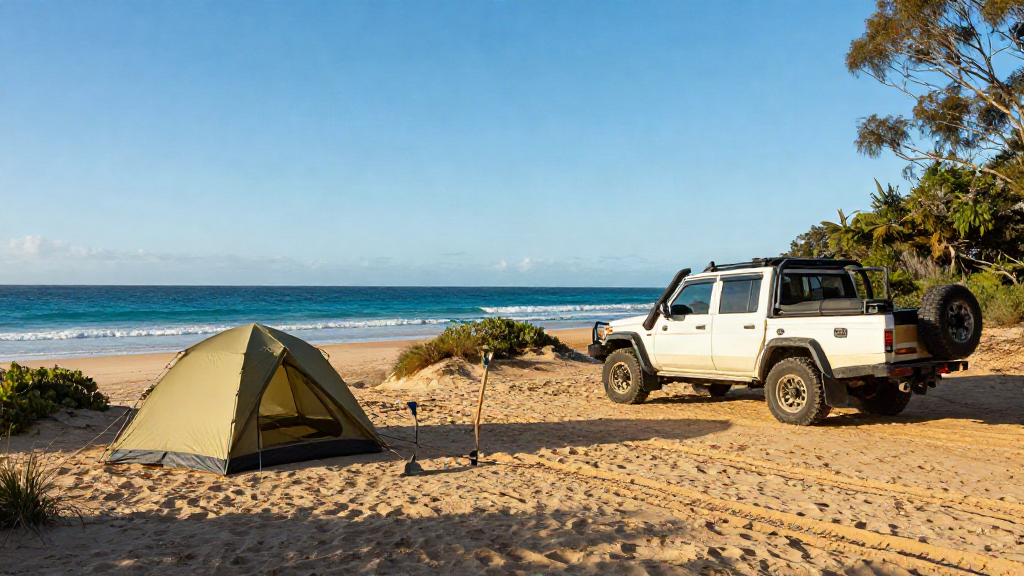
When the mercury climbs, every camper in the country points the car at the nearest coastline. Fair enough. Sand dunes, salt air and a sunset over the water beat a sweaty inland campsite any day of the week.
But coastal camping is its own beast. The beach does not care how good your swag is. It will bury it, soak it in salt spray and leave you bogged to the axles while the tide creeps closer. Here is how to do a beach camping trip properly, from dropping your tyre pressures to finding a drink of water when you are free-camping with an ocean view.
Read the tide before you read the map
The single most common coastal camping mistake is setting up on soft sand that was dry an hour ago. Before you pick a spot, check the tide chart for the day, not just the high-tide time. Look at how high the last high tide reached, the line of seaweed and debris on the sand tells you exactly where the water got to.
Camp above that line, and above the soft, churned-up sand that sits near the water. Firm, well-packed sand with a bit of vegetation behind it holds a swag far better than the loose stuff on the beach front. If the weather forecast mentions a swell or an onshore wind, give the water even more room. It is much easier to move camp in daylight than to dig your way out of a flooded campsite at 2am.
Drop your tyre pressures (and know when to stop)
If you are driving on sand, standard road pressures will dig you into it. Dropping your tyre pressures spreads the weight of the vehicle over a bigger footprint so you float across the surface instead of ploughing through it. As a rough starting point, drop from your road pressure to somewhere around 18 to 20 psi for firm beach sand, and lower again for soft dunes. Every vehicle, tyre and load is different, so start conservative and adjust if you feel the car starting to sink.
Two things matter more than the exact number. First, do not drive far on hard bitumen with your pressures low, re-inflate as soon as you hit the blacktop. Second, keep your momentum steady in soft sand. Consistent gentle throttle beats a burst of power every time, and turning sharply on a dune will dig you in faster than almost anything else.
Recovery basics for soft sand
Sooner or later every beach driver gets stuck. The good news is that sand is one of the kinder surfaces to recover from, if you have the right gear and a bit of patience.
Start by not making it worse. Spinning your wheels only digs the vehicle deeper, so stop the moment you feel the tyres bog. Then get out and look. Drop your tyre pressures further if you can. Clear the sand from in front of all four tyres and from behind them, a long-handled shovel earns its keep here. If you carry recovery tracks, place them under the bogged tyres for the wheels to climb onto. A slow, steady reverse often walks the vehicle straight out, and if that fails, gentle forward momentum over the tracks usually finishes the job.
For a proper recovery with a snatch strap, only ever use rated recovery points, never a tow ball, and let someone experienced show you the technique before you need it in anger. This is exactly the sort of gear it makes no sense to buy for one weekend.
Keep the sand out of your swag and tent
You will never fully defeat sand, but you can stop it ruining your sleep. A few habits make a huge difference.
Shake out your swag or tent each morning before you pack it, and never pack a sandy swag straight into its bag, that is how grit ends up in your bedding for the rest of the trip. Keep a small doormat or a square of shade cloth at the entrance and brush your feet before you go in. If it is windy, pitch your shelter with its opening facing away from the prevailing wind so the sand blows past instead of in. And keep your spare clothes and bedding zipped up in a duffel or bag, loose soft gear on a beach becomes a sand magnet within minutes.
Protect your gear from salt spray
Salt is patient. It works its way into tent zips, metal poles, stove fittings and vehicle electrics, and by the time you notice the corrosion it has already done the damage. A little prevention goes a long way.
Rinse anything metal with fresh water as soon as you get the chance, and dry it properly rather than letting it sit damp. A light coat of silicone spray or a wipe-down with a protective oil keeps hinges, zips and moving parts happy, especially if you camp near the water for a few days. Never pack away wet, salty canvas or a wet stove, dry them in the sun first and give them a freshwater rinse at home. Your vehicle deserves the same treatment. Hose the underside and the wheel arches when you leave the beach, salt on a 4WD is how rust quietly begins.
Finding freshwater when you are free-camping by the ocean
This is the part free coastal camping catches people out on. That beautiful, empty stretch of coastline is often empty for a reason, there is no tap anywhere near it. Assume you are bringing your own water and you will not go thirsty.
Work out your daily needs before you leave, drinking, cooking and washing add up fast, and carry more than you think you need in jerry cans or a water bladder. A portable filter lets you top up from a freshwater creek or a tap at the last town before the track turns to sand. If rain is forecast, a tarp rigged to catch runoff is a handy bonus, though never rely on it as your main source. Plan your trip around freshwater stops rather than hoping to stumble across them, and you will never have to cut a beach trip short because the tanks ran dry.
Hire the specialist kit instead of buying it
Here is the honest truth about coastal camping: the gear that makes it easy, the recovery tracks, the long-handled shovel, the snatch strap, the big water containers, the 4WD kit, is expensive, bulky and used a handful of times a year. Buying all of it for one trip to the coast makes no sense.
That is exactly why we built Four Swags. It is a peer-to-peer marketplace where you hire outdoor gear from locals near you, or earn from the camping and 4WD gear sitting idle in your own shed. Need recovery tracks for a dune trip this weekend? Hire them for the trip. Got a swag or a set of boards you rarely use? Listing your gear takes about five minutes, and it is earning for you the rest of the year.
Adventure more, own less.
Your coastal camping checklist
Before you roll out, tick off the essentials: tide chart checked and camp spot picked above the high-tide line, tyre pressures planned, long-handled shovel and recovery tracks packed, fresh-water containers filled past your daily estimate, silicone spray and a rag for salt protection, and a plan for where your next top-up comes from. Get those sorted and the beach does the rest.
The coast rewards campers who plan ahead and keeps a few tricks up its sleeve for the ones who do not. Read the water, respect the sand, look after your gear, and you will come home salty, sandy and already planning the next trip.
Hire it from a local
More guides
- How to Hire Outdoor Gear in Australia | Four Swags
- Weekend Camping Checklist: Gear to Hire, Not Buy
- What to pack for your first camping trip: the complete checklist
- Camping near Melbourne: 10 great spots within 4 hours
- Should you hire or buy camping gear? The real cost
- Camper trailer hire: a first-timer's guide