7 Things to Check When Renting a Tent
24 November 2026 · Four Swags
Renting a tent? Check these 7 essentials before you book, from size and condition to bonds and setup, so your trip starts dry and stress-free.
Last Updated: November 21, 2026
Quick Summary
When renting a tent, check that the size fits your group, the hire terms are clear, the gear is sound, and the setup is manageable. Inspect the tent at pickup, count pegs and poles, and photograph any existing damage before you sign.
- Add one person to the tent label when you want room for bags and bedding.
- Get the owner's answers about condition, leaks and damage in writing.
- Read the bond, cancellation, late return and cleaning clauses before you pay.
- Photograph any existing damage at pickup and note faults on the handover form.
- Ask for setup instructions and watch the demo at pickup if offered.
Table of Contents
- Start With a Tent Hire Checklist Before You Book
- How to Choose a Tent Size for Your Group
- Tent Rental Questions to Ask the Owner
- Inspect the Tent at Pick-Up: A 7-Step Check
- Tent Setup Instructions and What's Included in the Hire
- Book Your Tent Hire Through Four Swags
- Frequently Asked Questions
Start With a Tent Hire Checklist Before You Book
A tent hire checklist is a short list of questions and checks you run before renting a tent, so you know exactly what you're getting and what it costs.
Here's what matters most. What to check when renting a tent comes down to four things: the size fits your group, the hire terms are clear, the gear is sound, and the setup is something you can actually manage. Get those right and the rest is easy.
Below, we'll show you exactly how to run that checklist, from the first message to the handover.
The Pre-Booking Checklist
Run through this before you commit:
- Confirm the tent's sleeping capacity against your group size
- Ask what's included: pegs, poles, mallet, groundsheet, repair kit
- Check the hire dates and whether late returns cost extra
- Read the bond and damage policy in full
- Confirm the pickup and return location
- Ask about setup time and whether instructions are provided
- Check the cancellation terms
If you want a deeper look at the charges that can catch people out, our guide to camping gear rental fees to check before you pay breaks them down one by one.
How to Choose a Tent Size for Your Group
Tent size is where most first-timers get it wrong. A "four-person" tent rarely sleeps four adults comfortably with gear inside.
Use this as a starting point:
| Tent Label | Realistic Sleepers | Best For |
|---|---|---|
| 2-person | 1 adult plus gear | Solo trips |
| 3-4 person | 2 adults plus gear | Couples |
| 5-6 person | 3-4 adults | Small families |
| 8-person plus | 5-6 adults | Groups |
Add one person to the label when you want room for bags, bedding and a dry space to change. If you're camping in wet weather, go bigger again. You'll want somewhere to sit out a shower.
Tent Rental Questions to Ask the Owner
A good owner will welcome these questions. If they dodge them, that tells you something. But questions alone won't protect you, get the answers in writing, because the hire agreement is the document that decides who pays when something goes wrong.
Ask directly, and ask for the answer by message or email so you have a record:
- What's the tent's age and condition? Older canvas is fine if it's been looked after.
- Has it leaked before? Ask if the seams have been re-proofed.
- What happens if something breaks? Confirm the bond, damage cover and who pays for what.
- Can you show me the setup? A five-minute demo at pickup saves an hour at camp.
- What's the return condition? Ask whether you need to clean it, dry it, or both.
The last one matters. Packing canvas away damp can grow mould, which does not fully come out, so ask the owner how they want it returned.
The Hire Agreement: What to Read Before You Sign
Most rental disputes come down to four clauses. Read them before money changes hands, not at the counter with a queue behind you.
Bond and damage liability. Ask how much the bond is, how it is held, and what counts as 'damage' versus 'fair wear'.
Cancellation and weather policy. Ask what happens if you cancel, and what happens if the provider cancels because of severe weather.
Late returns. Confirm the return time and date, and the charge for a late return.
Cleaning and return condition. Ask exactly what 'clean and dry' means to this owner.
Safety and Site Rules to Confirm
Ask whether the hire includes any guidance on anchoring and guy lines, and confirm the tent's occupancy limit. Check with the owner about any rules on cooking, heating or open flame near the tent, and check with the relevant local council before booking if you plan to camp on a public site.
If you want a deeper look at the charges that can catch people out, our guide to camping gear rental fees to check before you pay breaks them down one by one.
Inspect the Tent at Pick-Up: A 7-Step Check
Inspect the tent before you leave the pickup point, not at camp. Once you've driven off, damage is harder to prove.
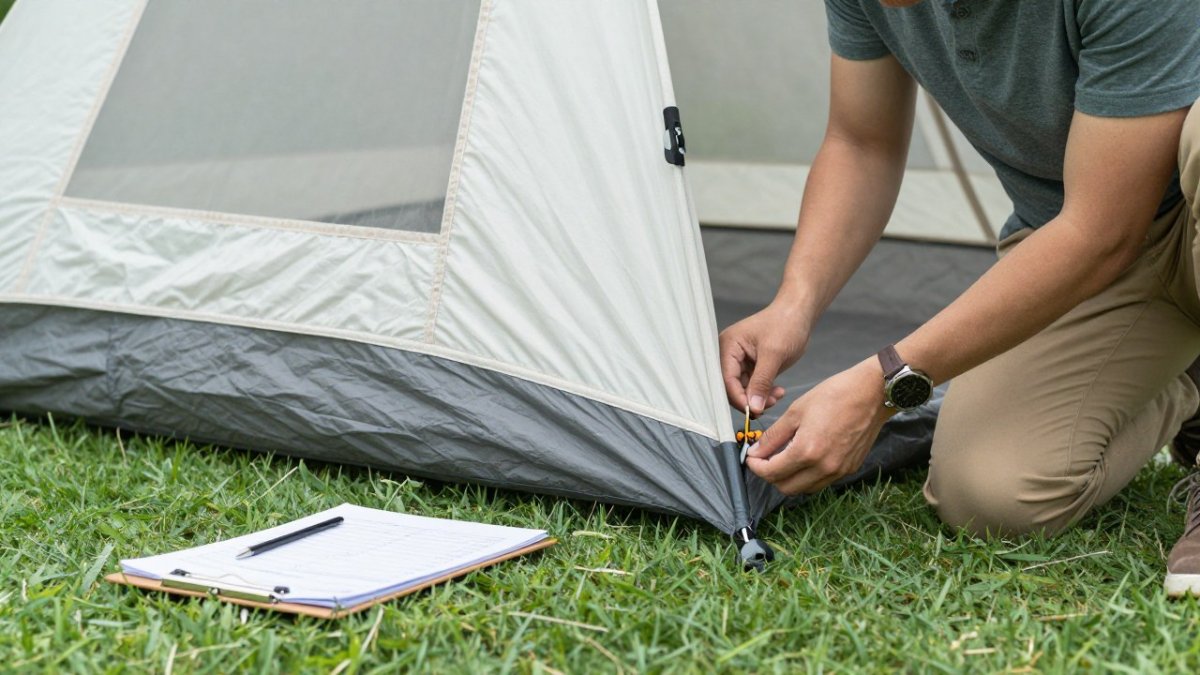
Work through these seven steps with the owner present, and record the result on the handover form or in a shared message thread:
- Unroll and lay it out flat. Look at the whole tent, not just the top.
- Check the canvas or fly for holes, tears and thin patches.
- Run your hand along the seams. Look for loose stitching or peeling tape.
- Count the pegs and poles. Match them against the owner's list.
- Check the zips. Open and close every door and window.
- Inspect the floor. Look for worn spots and pinholes.
- Photograph everything. Take clear photos of any existing damage before you sign.
Step seven protects you. A photo taken at pickup is the difference between a fair outcome and a dispute.
Make the Handover Record Do the Work
Photos are only useful if they are tied to an agreed record. Before you sign or pay the balance, ask the owner to note every pre-existing fault on the handover form or in a message you both keep. A short written line, 'small hole near rear left base, photographed', is worth more than a dozen photos with no context.
Watch out: signing a handover form that says 'tent in good condition' when you have already spotted a tear can make that tear your responsibility, so note faults before you sign, not after.
Common Damage to Look For
Some faults show up again and again:
- Small holes near the base, where gear gets dragged in
- Worn zips that stick or split
- Bent or missing pegs
- Cracked pole sections, often hidden inside the sleeve
- Mildew spots from previous damp storage
- Faded or thinning waterproof coating on the fly
Flag any of these to the owner before you leave. Most will note it on the handover form, and that protects you both.
The Return Inspection: Close the Loop
Do the same check in reverse on return day, with the owner present if possible. Lay the tent out, count the pegs and poles against the list, and photograph the tent as you hand it back. If the owner identifies a problem, ask them to show you and to record it on the return form before you leave. Ask when the bond will be refunded and how, bank transfer, card reversal or platform credit, and get that timing in writing.
A simple rule: photograph at pickup, photograph at return, and keep both sets until the bond lands back in your account.
Tent Setup Instructions and What's Included in the Hire
Ask for setup instructions at pickup, and watch the demo if one is offered. Setup time varies by tent, so ask the owner how long a pitch takes.
A typical hire may include:
- The tent, poles and pegs
- A mallet
- A groundsheet
- A carry bag
Some extras may be available, so ask:
- Extra pegs for hard ground
- A repair kit
- Lighting
- Sleeping mats, stretchers and bedding
Practise the setup in the backyard before your trip if you can. And check the site before you pitch: flat ground, no overhanging branches, and clear of power lines.
Book Your Tent Hire Through Four Swags
The checklist above works on any platform. It works best when the platform backs it up.
At Four Swags, renters verify their ID, a bond is held on each hire, and gear is photographed at pickup and return. You can browse swag hire from local owners and pick up gear near home or along your route. Kits and full camp setups can be a good option compared with hiring single items.
Before your next trip, run the checklist once. Confirm the size, read the bond terms, inspect the tent at pickup and photograph what you see. That five minutes is the difference between a good night's sleep and a wet one.
Frequently Asked Questions
What should I check before renting a tent?
Before renting a tent, confirm the size matches your group, ask what is included (pegs, poles, footprint, mallet), and check the rental agreement for bond, cancellation and damage terms. Inspect the canvas, zips and poles at pick-up and photograph everything with the owner present. Also confirm pickup and return times, and ask about setup instructions if you have not pitched that model before.
How do tent hire deposits and damage fees work?
Most providers hold a refundable bond on each hire, returned once the gear comes back clean and undamaged. Damage is usually assessed against the handover photos taken at pick-up and return, so insist on a joint inspection both times. Ask upfront what counts as fair wear versus chargeable damage. Get the terms in writing before you commit.
Should I practise setting up a hired tent before my trip?
Yes. Ask the owner to walk you through a pitch at pick-up, or set the tent up in your backyard before you leave. Practising takes 15 minutes and saves an hour of frustration at camp in the dark or rain. It also lets you confirm every pole, peg and guy rope is present while the owner is still reachable, rather than discovering a missing part at the campsite.
What should I do if a hired tent is damaged or missing parts?
Report it to the owner immediately, before you leave the pickup point if possible, and photograph the issue. If damage happens on trip, message the owner with photos as soon as you notice it rather than waiting until return. Most rental agreements handle accidental damage through the bond or damage cover, but hiding a problem usually voids that protection. A quick, honest message protects both sides.
Hire it from a local
More guides
- How to Coordinate Multi-Stop Camping Gear?
- Tips for First-Time 4WD Camping: Where Do You Start?
- Renting a Camper Trailer for Beginners: A Simple Start
- How to Rent Camping Gear Safely: A Step-by-Step Guide
- How to Save Money on Camping Gear Without Buying Cheap Junk
- Best Camping Gear for Family Trips: What to Hire or Buy