Camping Gear Hire FAQs: Deposits, Damage and Returns
29 October 2026 · Four Swags
- How bonds, deposits and damage cover work when you hire gear
- Pickup, delivery, returns and late-return questions answered
- What gear owners need to know before listing their first item
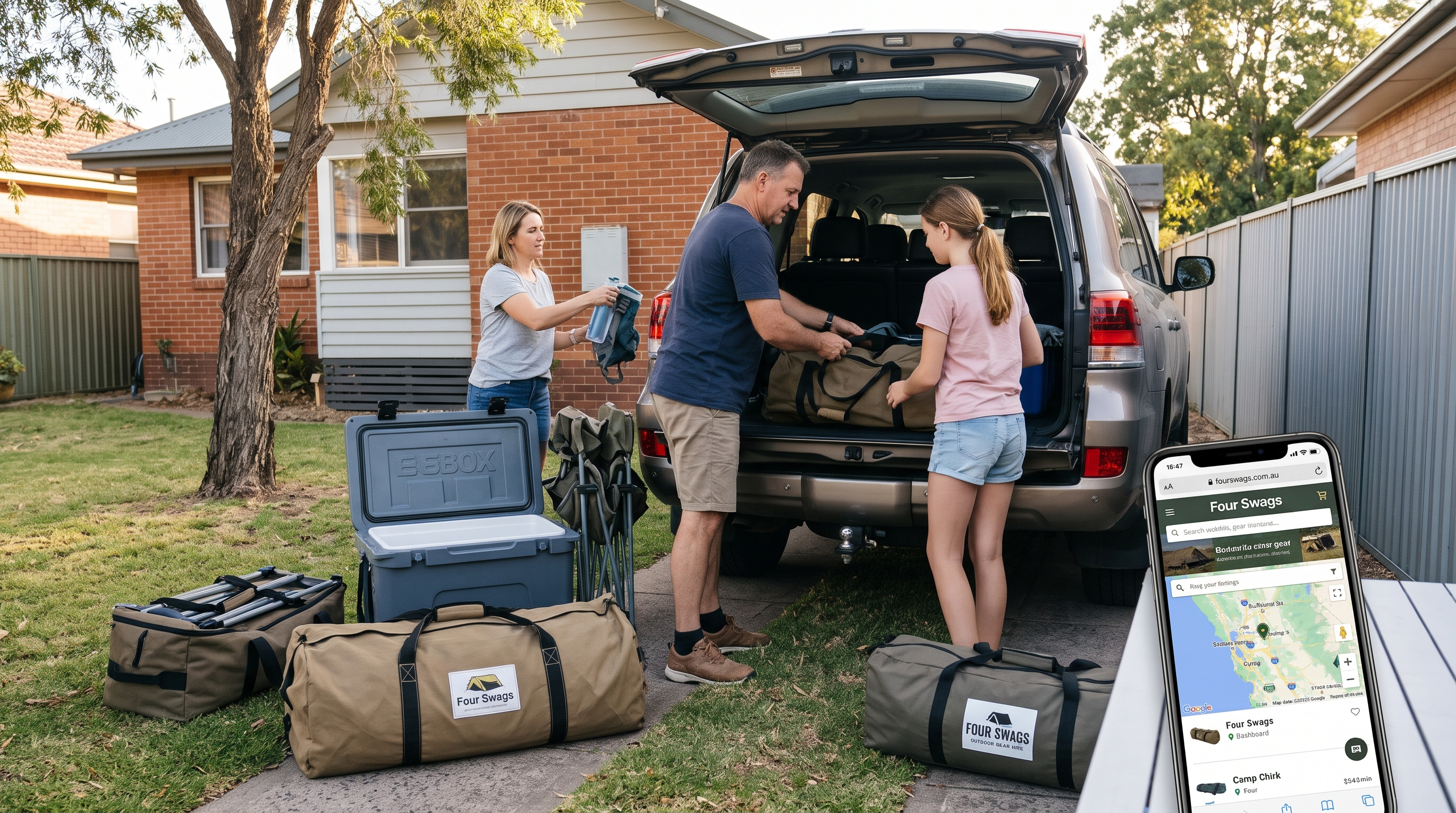
You want to head off for the weekend, not spend a month researching gear. That is exactly why camping gear hire exists - you grab the kit you need for the trip, use it, hand it back, and get on with your life. But before you book your first hire, there are a handful of practical questions almost everyone asks. Here is the camping gear hire FAQ, answered plainly.
What is camping gear hire and how does it work?
Camping gear hire is the simple idea of borrowing gear from someone who already owns it instead of buying it yourself. On Four Swags, that means hiring from locals near you - a swag, a rooftop tent, a fridge, a kayak, a surfboard, snow kit, whatever the trip calls for.
You find the gear you need, pick your dates, pay for the hire, and collect or have it delivered. Use it for your adventure, then return it the way you got it. The owner earns from gear that would otherwise sit in the garage, and you skip the cost of buying and storing things you might use twice a year.
How much does hiring camping gear cost?
Most hire prices are set per day, and often get cheaper the longer you book. A weekend swag or camp chair set costs a fraction of buying new, and the bigger the item - a caravan, a 4WD setup, a boat - the more obvious the savings become. Because you are hiring from a real owner, prices vary with the gear, the condition, and how close you are to a busy season. Check a few listings and you will quickly see what is fair for your trip.
Do I have to pay a bond or deposit?
Yes, many owners ask for a bond. Think of it as a refundable safety net rather than a fee. If the gear comes back clean and undamaged and on time, the bond is returned to you, usually shortly after the hire ends. Bond amounts depend on the value of the item - a small camp stove carries a lighter bond than a four-wheel drive. The bond amount is shown before you confirm, so there are no surprises.
What happens if I damage the gear?
Accidents happen. A torn tent pole, a scratched board, a cracked esky lid - it is all part of being outdoors. Damage cover and bond terms exist so that a small mishap does not become a scary bill. Normal wear and tear from sensible use is expected and fine. If something does break or get damaged, tell the owner straight away so you can sort it out together, and check what cover applies to that specific item before you book.
Can I pick up the gear, or get it delivered?
Both are common. Plenty of owners offer pickup from their place, which is the cheapest and simplest option - and a good chance to get a quick walkthrough of how everything works. Others offer delivery to your home, your campsite, or a meeting point on your route. Delivery is ideal when you are flying in, hiring something bulky, or just short on time. Filter by what suits your trip and confirm the details with the owner before the date.
How do returns and late returns work?
You agree a return time when you book, and the gear goes back to the owner the same way it arrived - clean, complete, and on schedule. Return it on time and everyone is happy. Running late happens, but the earlier you message the owner, the easier it is to sort out. Unplanned late returns can add extra daily charges, so plan your last day with a little buffer and you will avoid the hassle.
What do gear owners need to know before listing?
Listing is easier than it looks. Take clear photos, write an honest description, and note anything a hirer should know - does the fridge need a certain power setup, is the tent a two-person or a four-person, does it come with pegs and poles. Set a fair daily rate and a bond that reflects the item's value, and spell out your pickup and return expectations. From there, you set the rules, approve who hires your gear, and earn from kit that is sitting idle.
Is hiring cheaper than buying?
Often, yes - especially for gear you will not use constantly. Buy a full camping setup for one trip and you have paid hundreds of dollars plus storage space you may not have. Hire it and you pay for the days you actually need. If you camp every second weekend and know you will keep going for years, buying might make sense. If your trips are occasional, seasonal, or you simply want to try before you commit, hiring wins on cost and on cupboard space.
Ready to hire - or start earning?
Hiring gear should feel easy, and it does once the practical stuff is clear: bond back when you return it well, damage cover for peace of mind, pickup or delivery to suit your trip, and a return time you can plan around.
So what is your next adventure? Find the gear you need on Four Swags, or list what you already own and let it pay its way. Adventure more, own less.
Hire it from a local
More guides
- Coastal and Beach Camping Guide: Sand, Sun and Swags
- How to Hire Outdoor Gear in Australia | Four Swags
- Weekend Camping Checklist: Gear to Hire, Not Buy
- What to pack for your first camping trip: the complete checklist
- Camping near Melbourne: 10 great spots within 4 hours
- Should you hire or buy camping gear? The real cost